Smithsonian Institution — Strategic & Business Analysis
Institutional Strategy | Business Model | Performance Measurement | Public Value
Graduate comprehensive analysis developed through the Johns Hopkins University Museum Studies course, The Business of Museums.
Organization: Smithsonian Institution
Project Type: Graduate Strategic & Business Analysis
Scope: Independent academic analysis using publicly available Smithsonian strategic, financial, and performance materials.
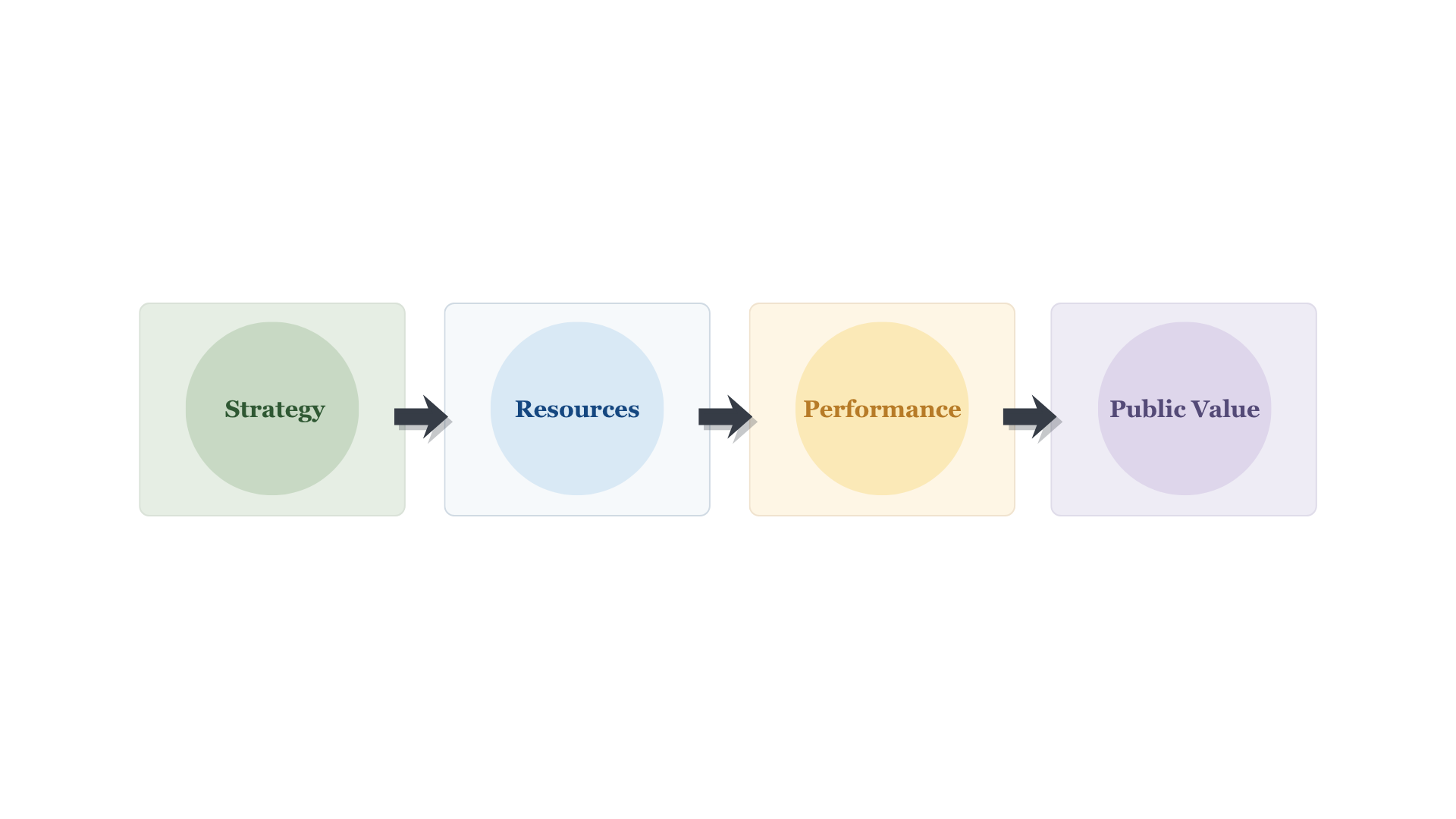
Strategic Analysis Framework — The project examines how institutional strategy, resources, and performance connect to the public value the Smithsonian seeks to create.
Challenge:
How well do the Smithsonian’s mission, strategic priorities, financial model, operational systems, and performance measures work together to support sustainable mission delivery, and where could the next strategic cycle strengthen measurement, resilience, and responsiveness?
Approach:
I examined the Smithsonian’s 2022–2027 Strategic Plan alongside its Metrics Dashboard, financial and performance reporting, and relevant museum-sector research. The analysis used several lenses—mission alignment, SMART goal assessment, business-model and funding analysis, performance measurement, and SWOT—to understand not only what the Institution is doing but also how its systems work together.
Strategic Plan | From Mission Alignment to Measurable Impact
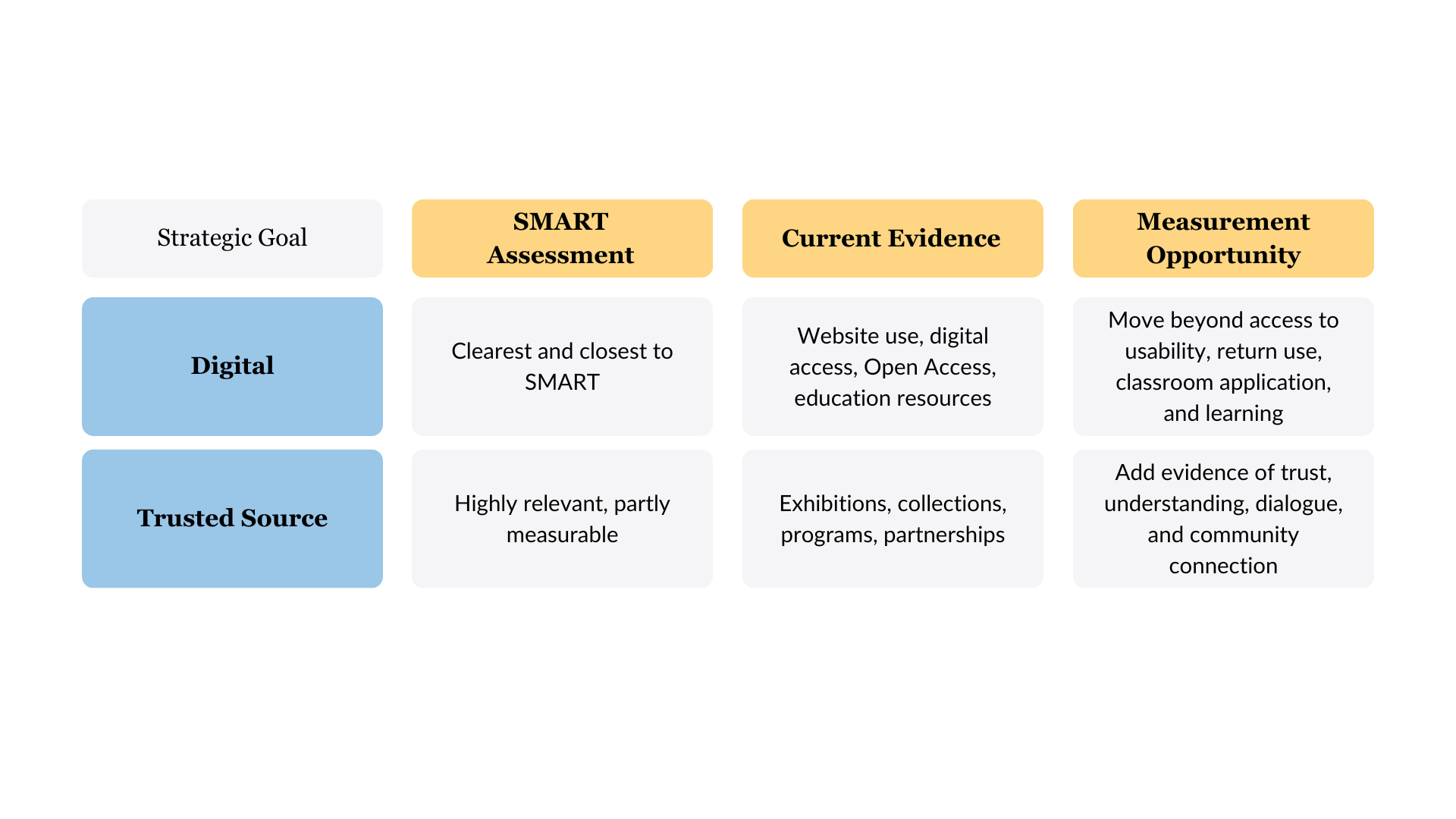
Strategic Goal Assessment — Excerpt. A SMART-based review compared the Smithsonian’s strategic goals with available performance evidence to identify where stronger outcome measures could improve accountability.
The analysis found strong alignment between the Smithsonian’s mission and strategic direction, but a less consistent connection between ambition and measurement. Activity and reach are often visible; deeper outcomes, such as learning, trust, belonging, community connection, and staff experience, are harder to see.
This led to a central question for the project: How can an institution move from showing how much it reaches to showing what that reach means?
Business Model | Connecting Money to Mission
The financial analysis looked beyond revenue diversification to examine how different funding sources support mission delivery. Federal appropriations provide a substantial foundation for operations, collections care, research, facilities, staffing, and public access, while private and trust resources add flexibility for programs, exhibitions, research, partnerships, and special initiatives.
The strategic issue is therefore not simply where money comes from, but how funding choices protect mission-critical work while allowing the Institution to adapt to changing conditions.
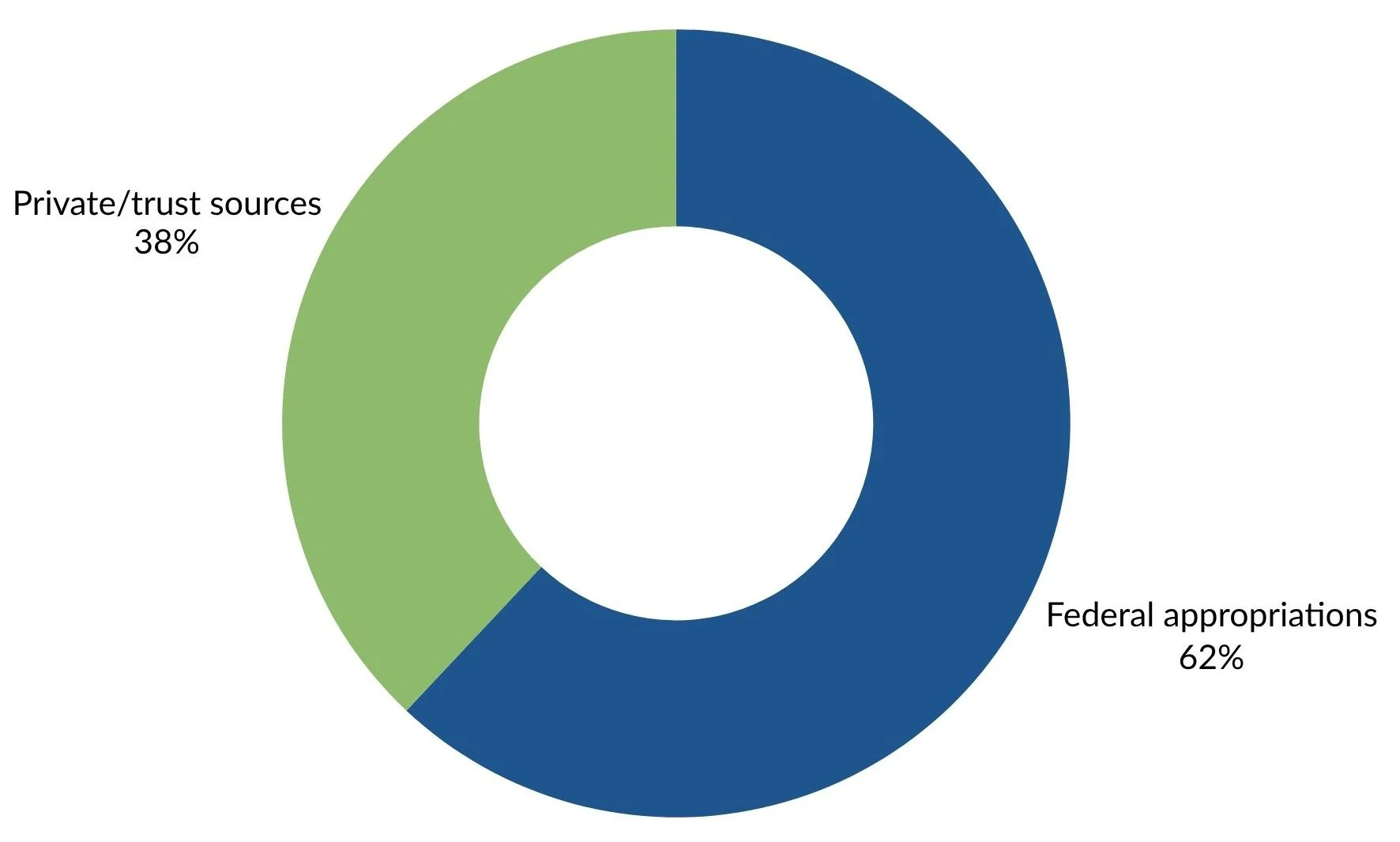
Hybrid Funding Model
The FY2025 funding mix illustrates the relationship between a substantial public funding base and the flexibility provided by private/trust resources. Percentages are approximate and presented to show scale rather than a complete revenue breakdown.
Strategic Synthesis | What Should Be Sustained, Sharpened, Built, and Buffered
The strategic and financial analyses were then brought together in a SWOT assessment. Rather than treating the matrix as an endpoint, I used it as a bridge between evidence and recommendations—identifying what the Institution could sustain, what needed sharper attention, where new opportunities could be developed, and which external risks required greater resilience.
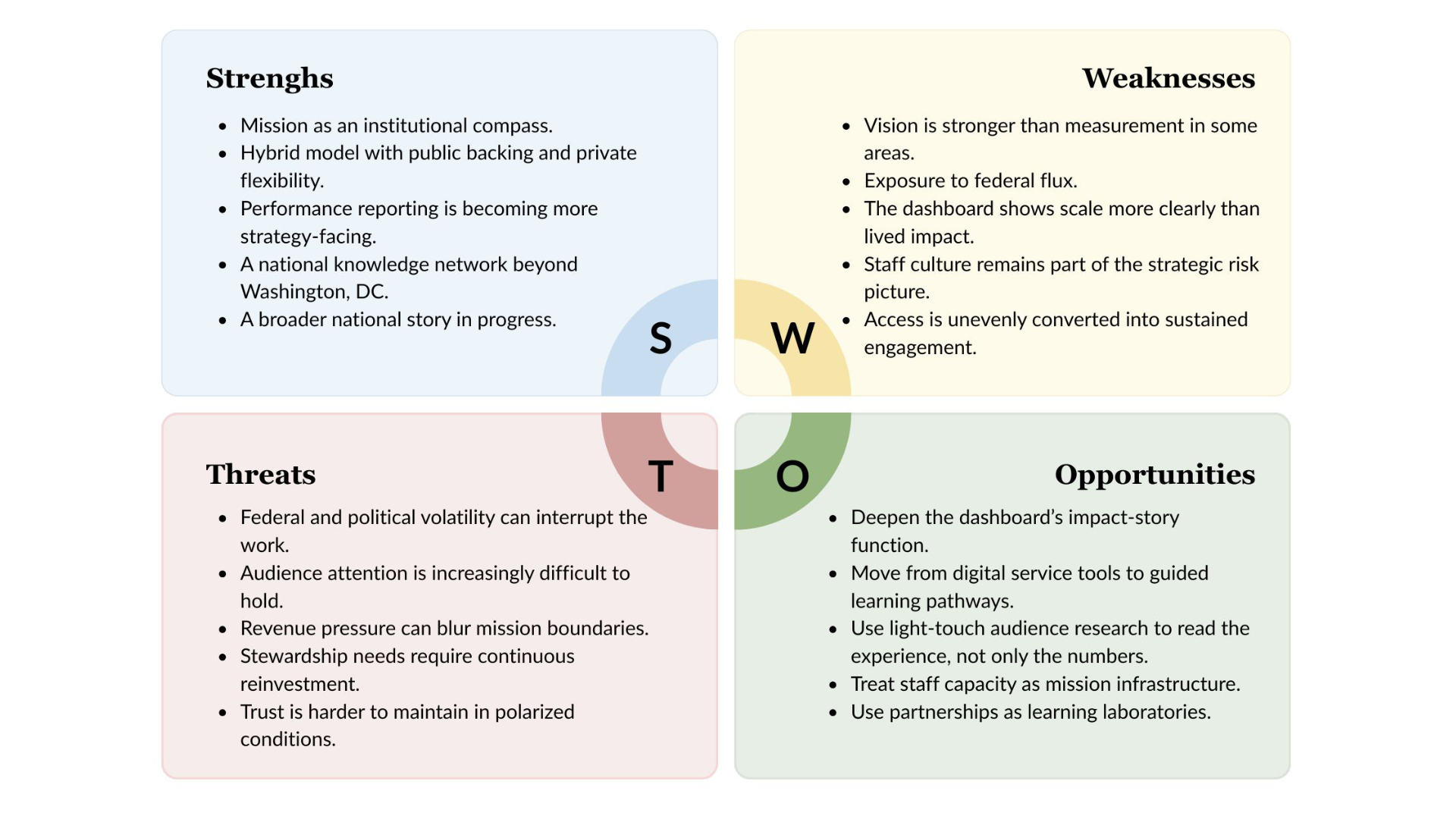
FROM FINDINGS TO PRIORITIES
The synthesis identified what the Institution could sustain, what needed sharper attention, where opportunities could be developed, and which risks required greater resilience.
Recommendations | Turning Analysis into Action
Sustain the hybrid model while identifying mission-protected funding priorities — identify a small group of institutional priorities that should remain supported through financial, operational, or political uncertainty.
Move from Access to Use in performance reporting — extend selected dashboard measures beyond reach and availability to examine whether people find, use, understand, return to, and benefit from Smithsonian resources.
Build a continuous audience-learning — use lighter, recurring forms of feedback and evaluation to bring audience evidence into ongoing program and institutional decisions.
Treat staff capacity as mission infrastructure — make retention, professional development, belonging, and internal trust more visible as conditions that affect mission delivery.
From Access to Use
One recommendation grew from a recurring pattern in the analysis: access is easier to count than impact. I developed an Access-to-Use framework to explore how performance reporting might move from documenting reach toward understanding use, meaning, and continued engagement.
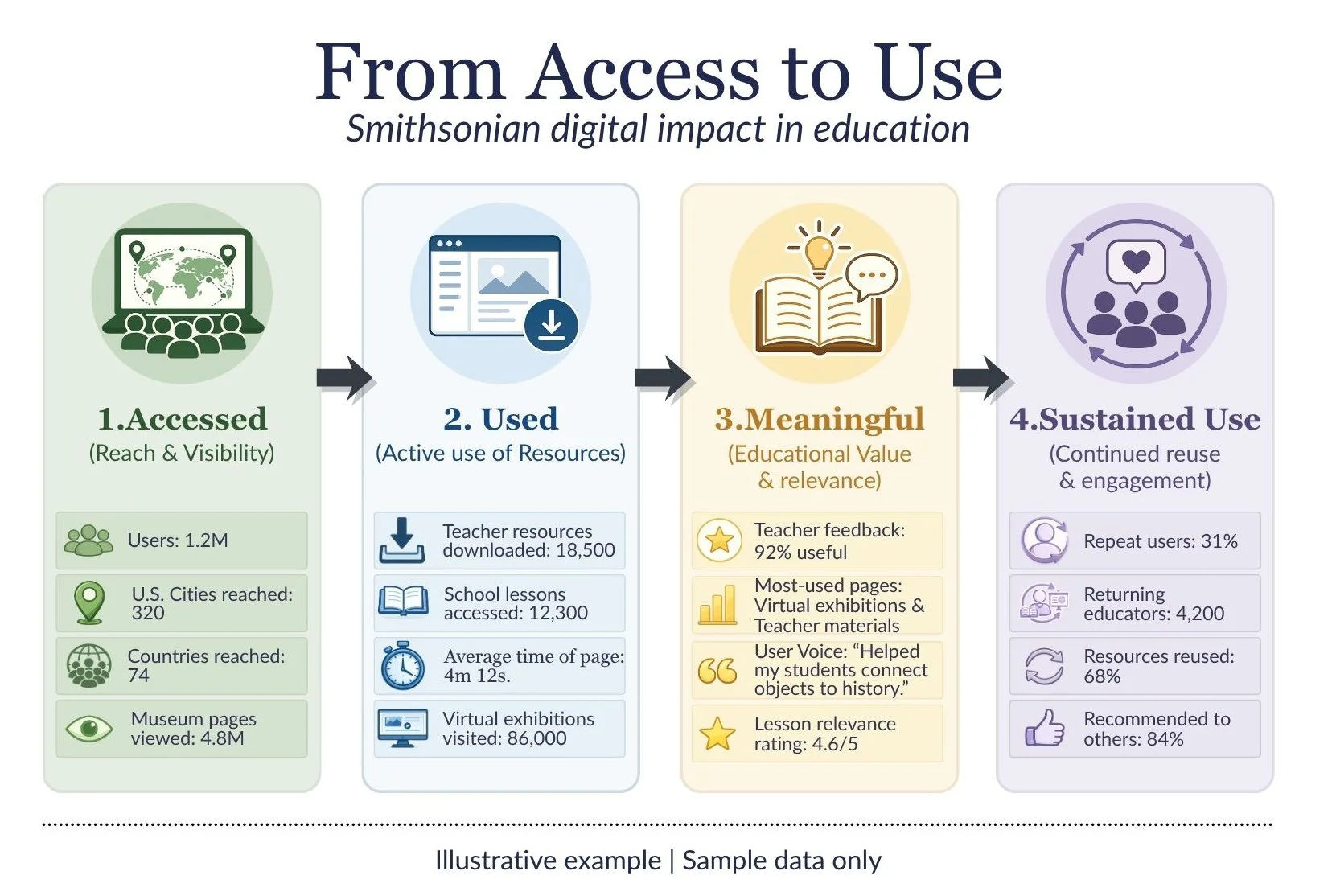
Conceptual Access-to-Use Framework —An illustrative model showing how quantitative indicators and qualitative audience evidence could work together to explain what happens after access is provided. Sample data are illustrative only.
What this project demonstrates:
Institutional analysis · Strategic-plan evaluation · Business-model analysis · Financial reasoning · Performance measurement · SWOT synthesis · Audience-centered evaluation · Recommendation development · Visual communication
This project strengthened my interest in the space between what an institution says it values and how that value becomes visible through budgets, metrics, audience evidence, partnerships, and the people responsible for carrying out the work.