Before the Objects: Starting with Systems
Museums are often introduced through objects (artifacts, artworks), and the stories that fill their galleries. Yet the first conversation of this seminar began somewhere less visible: systems.
Gathered at the Johns Hopkins University Bloomberg Center, our group entered a discussion not about exhibitions, but about volatility. About what it means to steward cultural institutions in a moment when leadership shifts quickly, narratives are contested, and institutional stability feels less guaranteed than it once did. (1)
In other words, we began by confronting the reality of museums operating in a VUCA world.
The Invisible Infrastructure Behind Exhibitions
That idea of systems quickly became tangible during our introduction to the Irene & Richard Frary Gallery, led by its inaugural director, Caitlin Berry.
The conversation moved beyond professional paths and into a topic visitors rarely notice: environmental infrastructure. The gallery is currently working to maintain momentum while temporarily closed to upgrade its HVAC system to museum standards.
Museums borrowing works from other institutions must demonstrate strict climate control:
Temperature: 68–72°F
Relative humidity: 40–60%
These conditions prevent deterioration of sensitive materials such as textiles, paintings, and paper artifacts.
As someone interested in exhibition design and planning, this discussion reinforced a fundamental point: the success of an exhibition depends not only on narrative or aesthetics, but also on a network of technical systems working quietly behind the scenes.
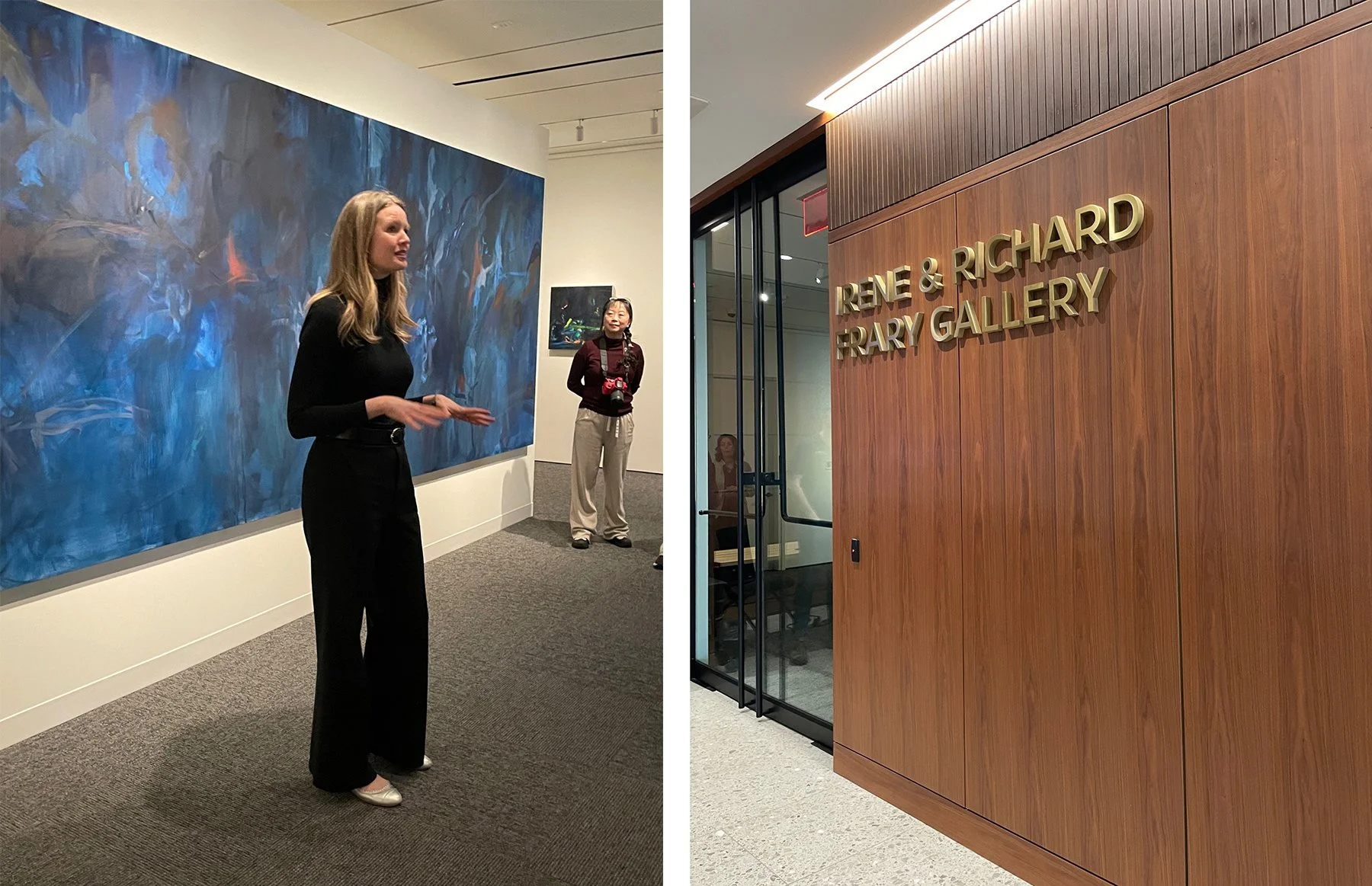
Caitlin Berry (Inaugural Gallery Director) | Frary Gallery exhibition space. Artwork by: Lindsay Adams
Museums and the Reality of Uncertainty
If infrastructure reveals the hidden systems supporting exhibitions, the seminar’s roundtable discussion revealed the systems shaping museum leadership.
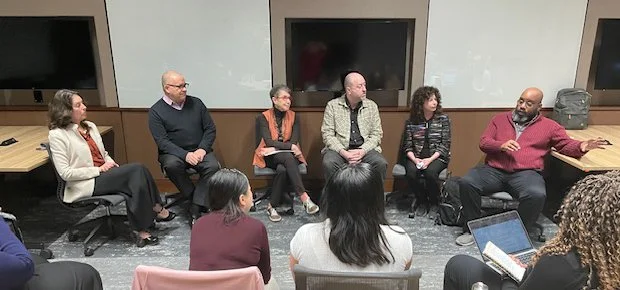
VUCA roundtable:
Karen Wizevich (JHU Instructor), Greg Stevens (JHU Instructor), Marsha Semmell (Consultant, IMLS, NEH, AAM), Ranald Woodaman (Asst. Director Exhibition Development, NM of the American Latino), Phyllis Hecht (Inaugural Director JHU Museum Studies Program), Jon West-Bey (Independent Curator, JHU lecturer),
The conversation brought together Marsha Semmel, Jon West-Bey, Ranald Woodaman, and Phyllis Hecht. Their discussion focused on VUCA (a world defined by volatility, uncertainty, complexity, and ambiguity) and the related concept of BANI (brittle, anxious, nonlinear, incomprehensible), which addresses how individuals experience these conditions.
One idea surfaced clearly: museums can no longer operate as isolated institutions. Partnerships across organizations are no longer optional; they are essential for resilience.
Leadership, Listening, and Shared Authority
In a brief conversation afterward, Marsha Semmel expanded on a theme that lingered throughout the discussion: effective museum leadership today requires listening, experimentation, and shared authority.(2)
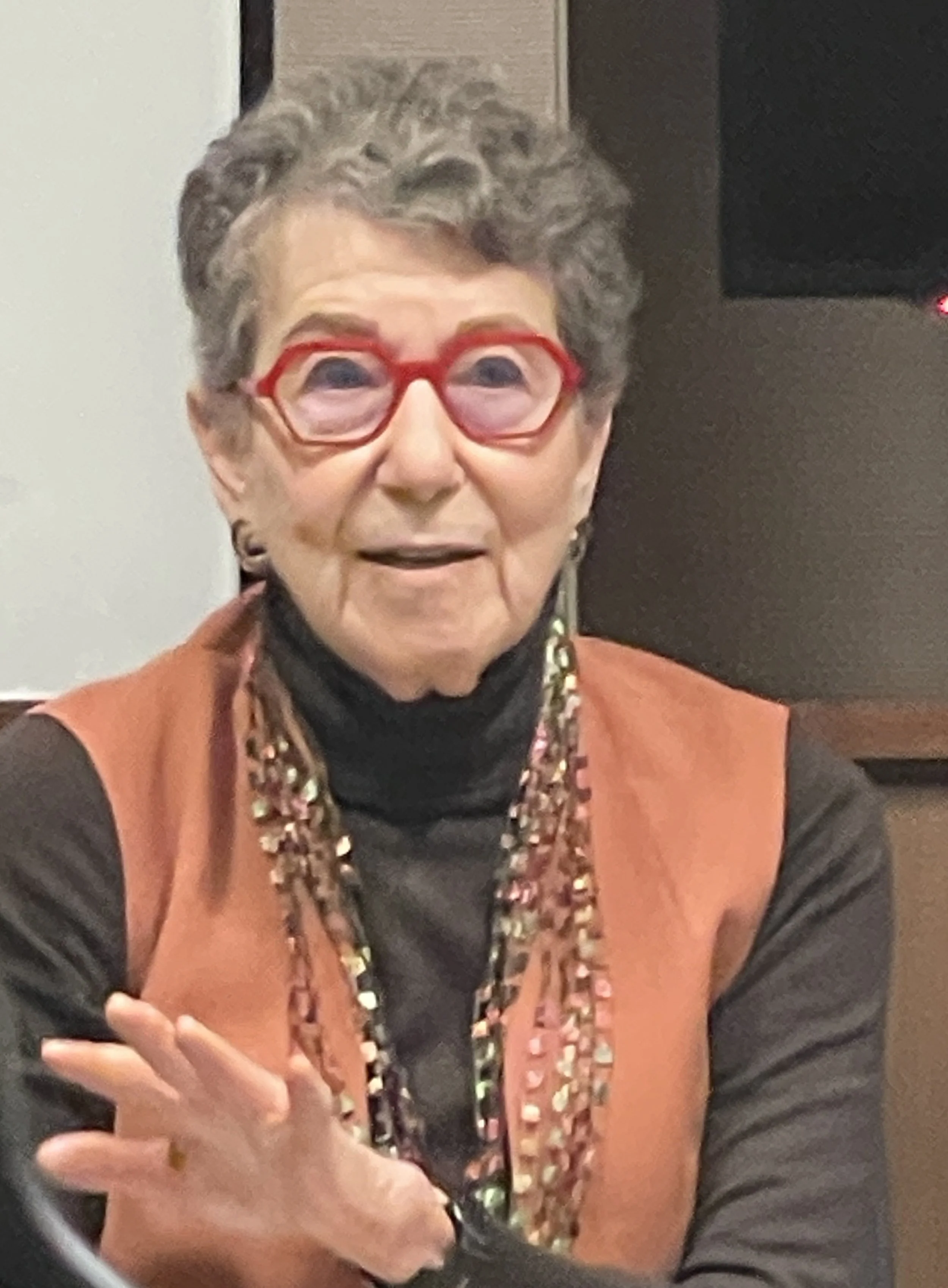
Marsha Semmell
(Consultant, IMLS, NEH, AAM)
She referenced ideas from Leaders Make the Future (3), including leadership skills such as strength with humility, clarity in confusing times, and common creating.
Jon West-Bey added another important perspective: volatility is not tied to a single political moment. It is a constant condition that institutions must learn to navigate. Doing so may require one of the most difficult leadership skills of all: the ability to depolarize conversations and work across disagreement.
Community in Practice: Lessons from the MLK Library
The visit to the Martin Luther King Jr. Memorial Library offered a powerful contrast to the morning’s conceptual conversations.
Here, community engagement was not theoretical; it was operational. The building’s renovation reflects a vision of cultural infrastructure designed to support civic life through public programs, accessible spaces, and community services.
This visit brought me back to ideas explored in a previous architecture or museums course: architecture can shape how institutions cultivate trust, welcome, participation, and belonging. In this sense, the library functions not only as a repository of knowledge but also as an active civic platform.
Reflection on Meaning-Making
Later, while visiting the Smithsonian American Art Museum, I encountered Nick Cave’s exhibition Mammoth. One quote stayed with me:
“History is something that is made, as are ourselves and our ties to one another.”
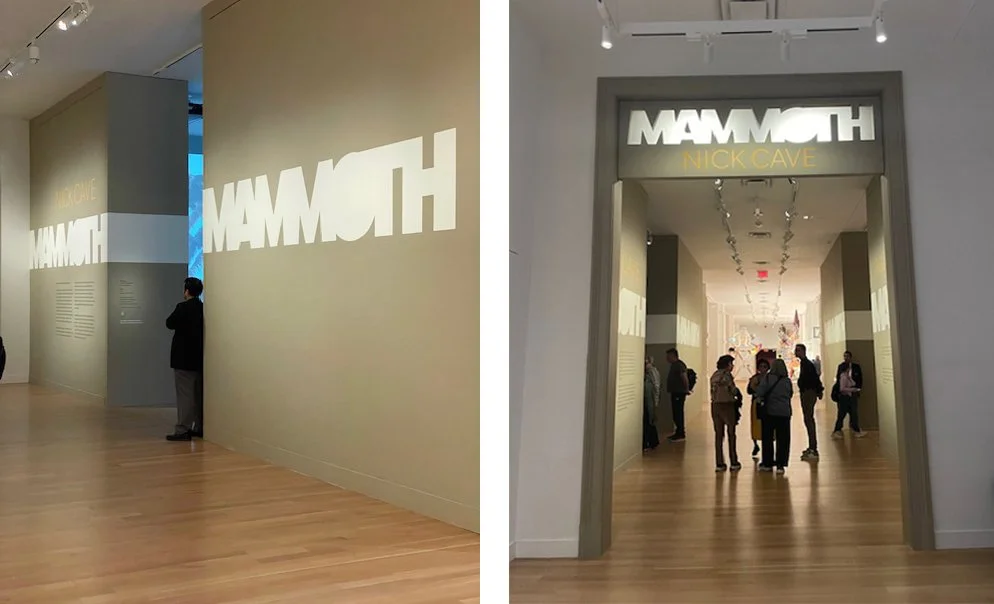
Nick Cave’s exhibition Mammoth (Entry) at the Smithsonian American Art Museum.
After a day of conversations about uncertainty, leadership, and institutional purpose, the statement, although not directly related to VUCA, felt particularly relevant. As Cave’s project “envisions a world animated by the power of the past and the transformative possibilities of the imagination” (Smithsonian American Art Museum, n.d.), museum leaders today are also being called to develop what futurist Bob Johansen describes as future-back curiosity, where imagination helps envision a different future.
Johansen writes:
“Fear will be part of the future. Being afraid, however, will be optional. Courage will be required.”
Resilience, perhaps, is not the absence of pressure. It is the commitment to meaning-making despite it.
Big Thanks to:
Caitlin Berry, Executive Director | Irene & Richard Frary Gallery
Marsha Semmell, Consultat | Marsha Semmel Consulting
Ranald Woodaman, Asst. Director Exhibition Development | National Museum of the American Latino
Phyllis Hecht, Inaugural Director, JHU Museum Studies Program | Johns Hopkins University
Jon West-Bey, Independent Curator and JHU lecturer
Karen Wizevich, Instructor | Johns Hopkins University
Greg Stevens, Instructor | Johns Hopkins University
Footnotes:
(1) Bourland, I. (2026, Jan. 07) Can Washington DC’s Cultural Institutions Survive Trump? Frieze, 256.
(2) Dexter, A.Y., Semmel, M.L., & Yellis, K. (Eds). (2022). Change is Required. Preparing for the Post-Pandemic Museum. Rowman & Littlefield.
(3) Cervantes, G., Johansen, B., & Kirshbaum, J. (2025). Leaders Make the Future (3rd Ed.). Berrett-Koehler Publishers