
Craft, Leadership, and the Business of a Museum
Day 3 began at the George Washington University Museum and the Textile Museum, where Director John Wetenhall opened our visit with a candid conversation not only about collections, but about the realities of running a museum within a university.
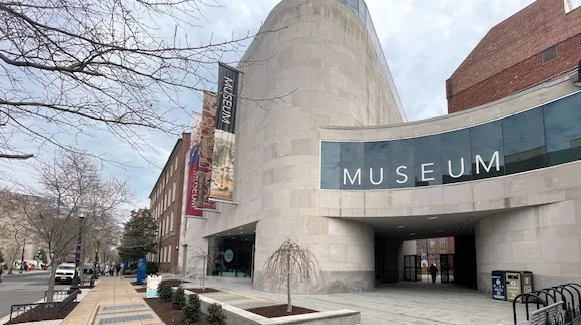
George Washington University Museum + Textile Museum
Washington DC
His remarks moved beyond objects and exhibitions to address leadership, sustainability, fundraising, labor, and institutional value. One point that stayed with me was his challenge to the long-standing assumption that a stronger museum is simply the one with the largest collection. Instead, he argued that the real question is whether a collection is actively used (for teaching, scholarship, student training, and public engagement), rather than quietly expanding in storage.
That perspective reframed stewardship for me. Care is not only about preservation; it is also about building a model that allows collections to remain meaningful and accessible.
Afterward, Analissa Dimen, Special Assistant to the Director, guided us through the museum and discussed how the institution works with students, faculty, and visiting communities. We were also introduced to key considerations in textile stewardship: light sensitivity, pest prevention, freezing protocols, archival housing, and the careful handling required when fabrics are used for research and teaching. The Cotsen Textile Traces Study Collection plays an important role in this effort by making fragments and study textiles accessible to scholars and students.
A Textile Museum representative explains key aspects of the textile collection, including preservation considerations and how fabrics are handled for research and teaching.
Curatorial Practice as Collaboration
A short walk later brought us to the Luther W. Brady Art Gallery, located in the historic Flagg Building of the Corcoran School of the Arts and Design at GW.
Assistant Director Olivia Kohler-Maga described the gallery as an interdisciplinary space where exhibitions often emerge through cross-departmental collaboration.
Recent projects have involved students from theater, music, medicine, geology, and interior architecture, contributing research, writing exhibition labels, offering performances, or even designing gallery furniture. In this context, curatorial work becomes a form of collective making.
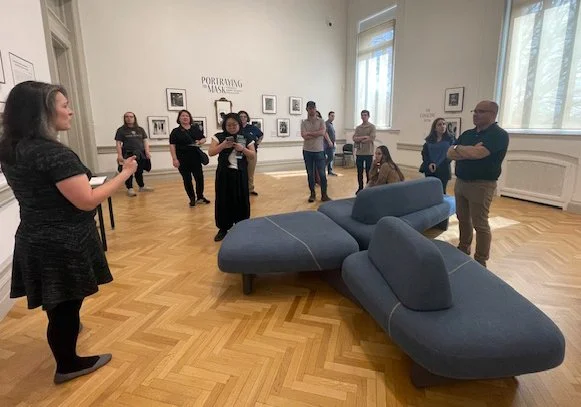
Gallery Seating
Seating designed by GW Interior Architecture students for the Brady Gallery, where student design work becomes part of the exhibition environment itself.
Exhibitions are not simply displays of objects; they are crafted environments shaped through dialogue, experimentation, and shared expertise. Once again, the idea of activating collections surfaced: their meaning grows through repeated use, reinterpretation, and cross-disciplinary engagement.
When Craft Becomes Storytelling
The afternoon continued at Book Arts, where Stephen Van Doren, Director, and John Paul Greenawalt, Art Director and Project Manager, introduced us to a studio practice operating at the intersection of art, design, craft, and storytelling.
Their work includes handmade books, custom presentation objects, and limited editions created for museums and institutions. What stood out most was their emphasis that craft is not nostalgia; it is invention, precision, material intelligence, and the ability to communicate meaning through form.
Many of the works function almost like portable exhibitions: objects designed not only to present information, but to shape how it is experienced. Material choices (paper, binding, texture, gold tooling) become interpretive decisions.
At one point, seeing one of their Four-Panel Z-Folds reminded me of a portfolio I created nearly fifteen years ago using a similar folded structure: hand-stitched pages on one side and pockets for supporting material on the other. That memory resurfaced unexpectedly, reinforcing how craft traditions continue to shape the way stories are presented and experienced.
Craft as Memory, Craft as Continuity
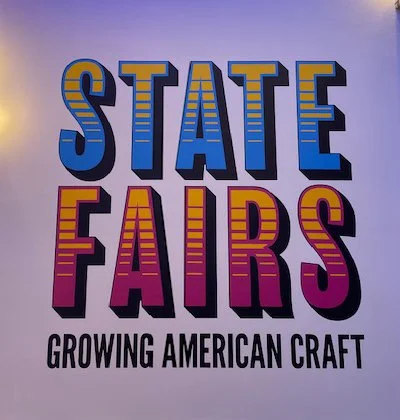
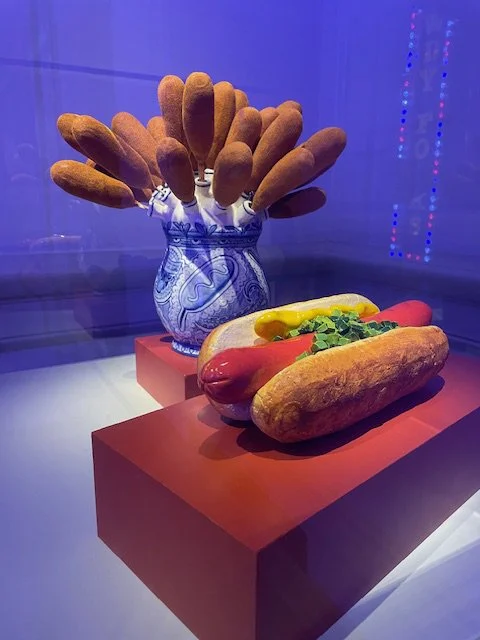
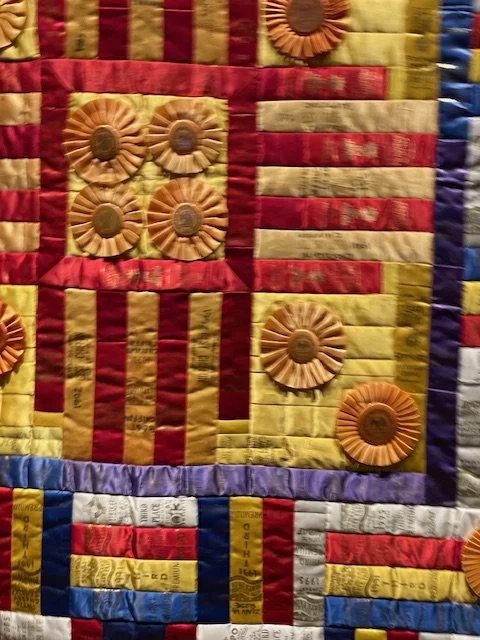
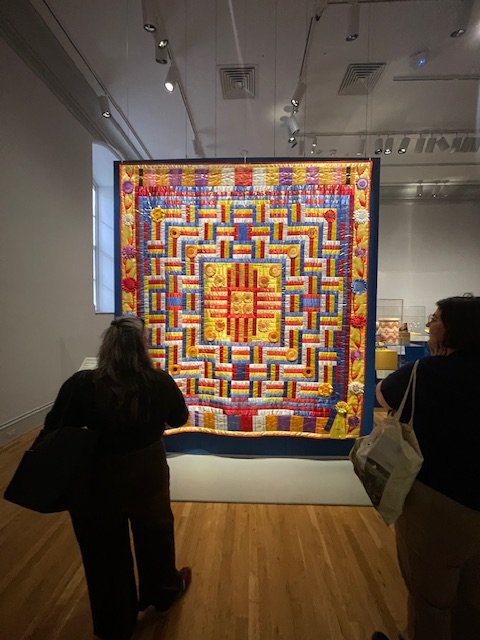
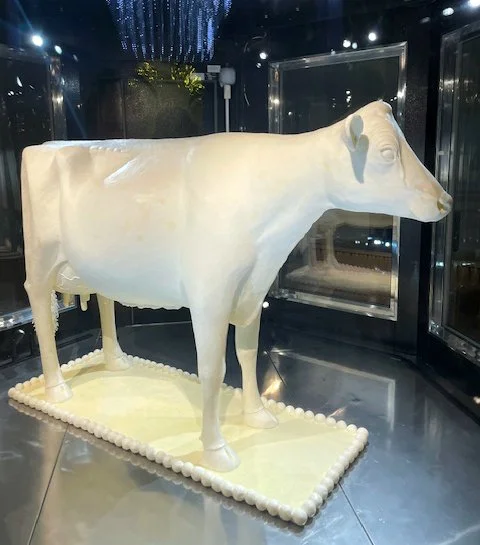
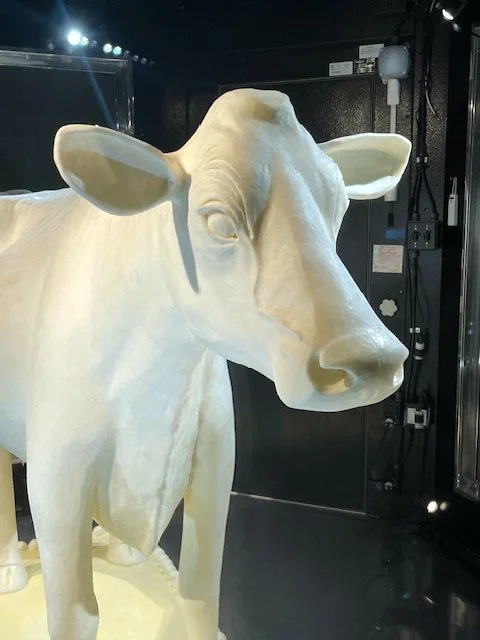
The day concluded at the Renwick Gallery of the Smithsonian American Art Museum, where we visited State Fairs: Growing American Craft.
By then, the theme of the day had become clear. Craft was not only present in the final exhibition but also ran throughout the day: in leadership models, in collection activation, in textile handling, in interdisciplinary exhibition making, and in the precise production of handmade interpretive objects.
And really…who doesn’t carry some memory of a state fair?
Big thanks to:
John Wetenhall | Director, George Washington University Museum and The Textile Museum
Analissa Dimen | Special Assistant to the Director, GW Museum and The Textile Museum
Mary Chavez | Fellow, GW Museum and The Textile Museum
Olivia Kohler-Maga | Assistant Director, Luther W. Brady Art Gallery
Stephen Van Doren | Director, Book Arts
John Paul Greenawalt | Art Director and Project Manager, Book Arts